
Understanding How Geological Conditions Shape Gemstone Rarity
Part 2 of the Mine to Market to Memory series
In January, we explored where gemstones begin and how time, pressure, and chemistry create these natural treasures. This month, we continue the journey by examining why some gemstones are rare, how geological conditions limit their formation, and why rarity matters beyond price. Understanding this is key to appreciating a gemstone’s journey from mine, to market, to memory.
Understanding the Geological Storm
Gemstone rarity is a matter of chemistry and physics. To understand why a stone is rare, you must look at how it begins. Most minerals are common because the elements that make them are abundant. Gemstones are different because they often require elements that do not usually meet.
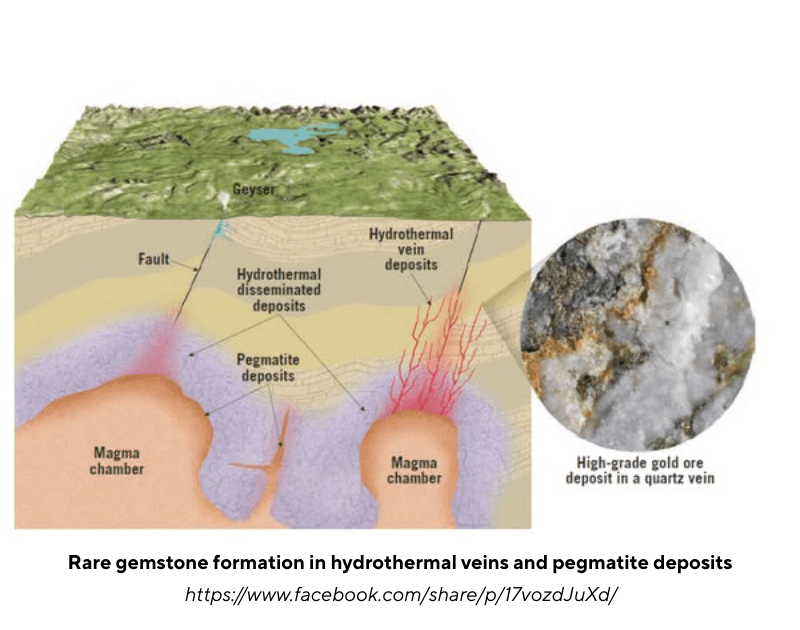
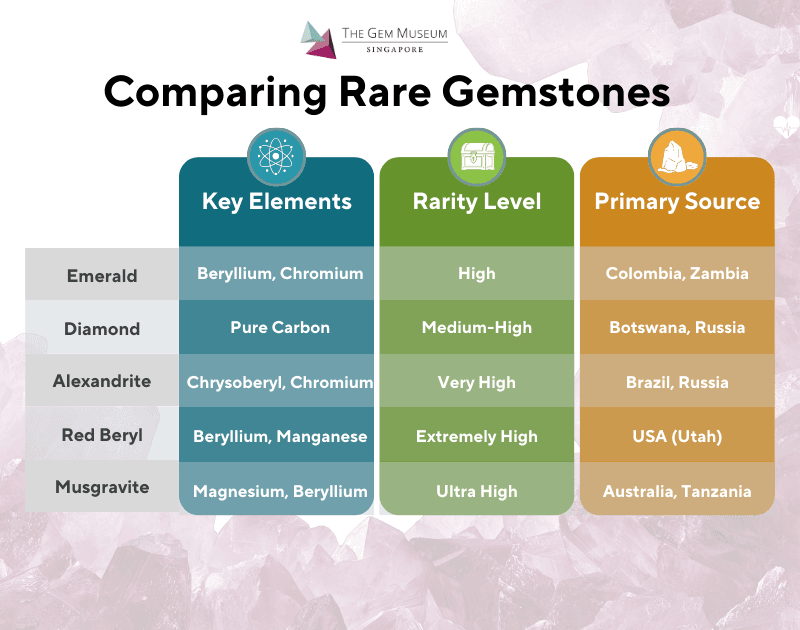
For example, emeralds need beryllium and chromium. In nature, these elements are typically found in different types of rocks. They only meet when tectonic plates move or hydrothermal fluids carry them together. Even then, the temperature must stay within a narrow range for the crystal to grow without cracking.
Diamonds form hundreds of miles below the surface in the Earth’s mantle. They require intense heat and pressure to turn carbon into a crystal. Most diamonds stay trapped deep underground. Volcanic eruptions bring them to the surface quickly. If the ascent is too slow, the diamond can turn into graphite.
Rare Stone Doesn’t Always Mean Famous
Some stones are so rare that you will rarely see them in a standard jewelry store.
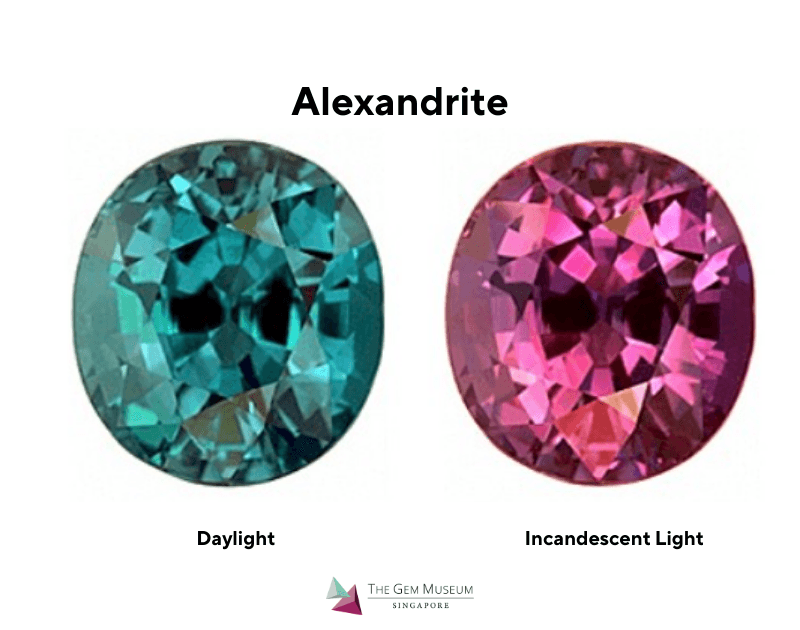
- Alexandrite: This stone changes color from green to red. It requires chromium, the same element that makes emeralds green. However, it also needs a specific crystal structure that is incredibly difficult for nature to produce.
- Red Beryl: This is one of the rarest gemstones on Earth. It is found in only a few locations in Utah and New Mexico. It requires a specific volcanic environment called a rhyolite flow.
- Musgravite: This is a top-tier rarity in the gemstone world. For a long time, only a few specimens existed. It is often mistaken for Taaffeite because the chemical difference is so slight.
Popularity follows culture. Rarity follows geology.
Size, Quality, and Survival
Formation is only the first hurdle. A gemstone must survive for millions of years before a miner finds it. Earthquakes, pressure changes, and erosion can destroy crystals.
Large gemstones are much rarer than small ones. This is because a crystal must remain undisturbed for a longer period to grow. Most stones found in mines are small or filled with inclusions. A large, eye-clean stone is a geological miracle.
Why Origin Matters in Valuation
When a mine closes, the supply of that specific gemstone stops. This is why origin is a major factor in valuation. A ruby from Myanmar or a sapphire from Kashmir carries a premium. These locations produced stones with unique chemical “fingerprints” that cannot be replicated elsewhere. These inclusions to tell the story of where and when a stone formed.
Mining Reveals Nature’s Rarity
Mining does not create rarity. It uncovers it.
Deposits take millions of years to form but may be depleted within decades. Once a mine closes, no more stones can come from that source. Origin matters—it connects a gemstone to a place, a time, and a story that cannot be recreated.
From Mine, to Market, to Memory
A rare gemstone follows three stages:
- Mine – shaped entirely by natural forces
- Market – valued and shaped by human knowledge, craftsmanship, and trust
- Memory – becomes personal, marking milestones or passing down across generations
Rarity is no longer abstract; it becomes remembered.
Frequently Asked Questions
Why are gemstones rare in nature?
Gemstones require a rare mix of pressure, heat, and chemistry. These conditions must remain stable for millions of years.
Are diamonds the rarest stones?
No. While high-quality diamonds are rare, stones like Red Beryl and Alexandrite are much harder to find in nature.
Does a rare stone always cost more?
Rarity is one factor in price. Beauty, durability, and market demand also play roles. A very rare stone that is not durable may be less expensive than a popular stone like a sapphire.
How does mining affect rarity?
Mining reveals rarity but does not create it. Most deposits are small and can be depleted in just a few decades.
Visit the Gem Museum
Come and see these rare wonders for yourself. Discover the unique stories these gemstones carry from deep within the Earth and speak with our team about the science behind the sparkle. Register your visit now.
