
Gemstone Discovery Bags and Mystery Boxes: Your Specimen No. 1
Every collection begins with one discovery.
You do not need a cabinet full of minerals or a textbook’s worth of knowledge to begin. Start with one specimen. Look closely, ask a question and discover something you did not know before.
Our Gemstone Discovery Bags invite you to uncover a surprise specimen and begin exploring its story. Opening the bag is only the beginning—what will you notice next?
What will your Specimen No. 1 be?
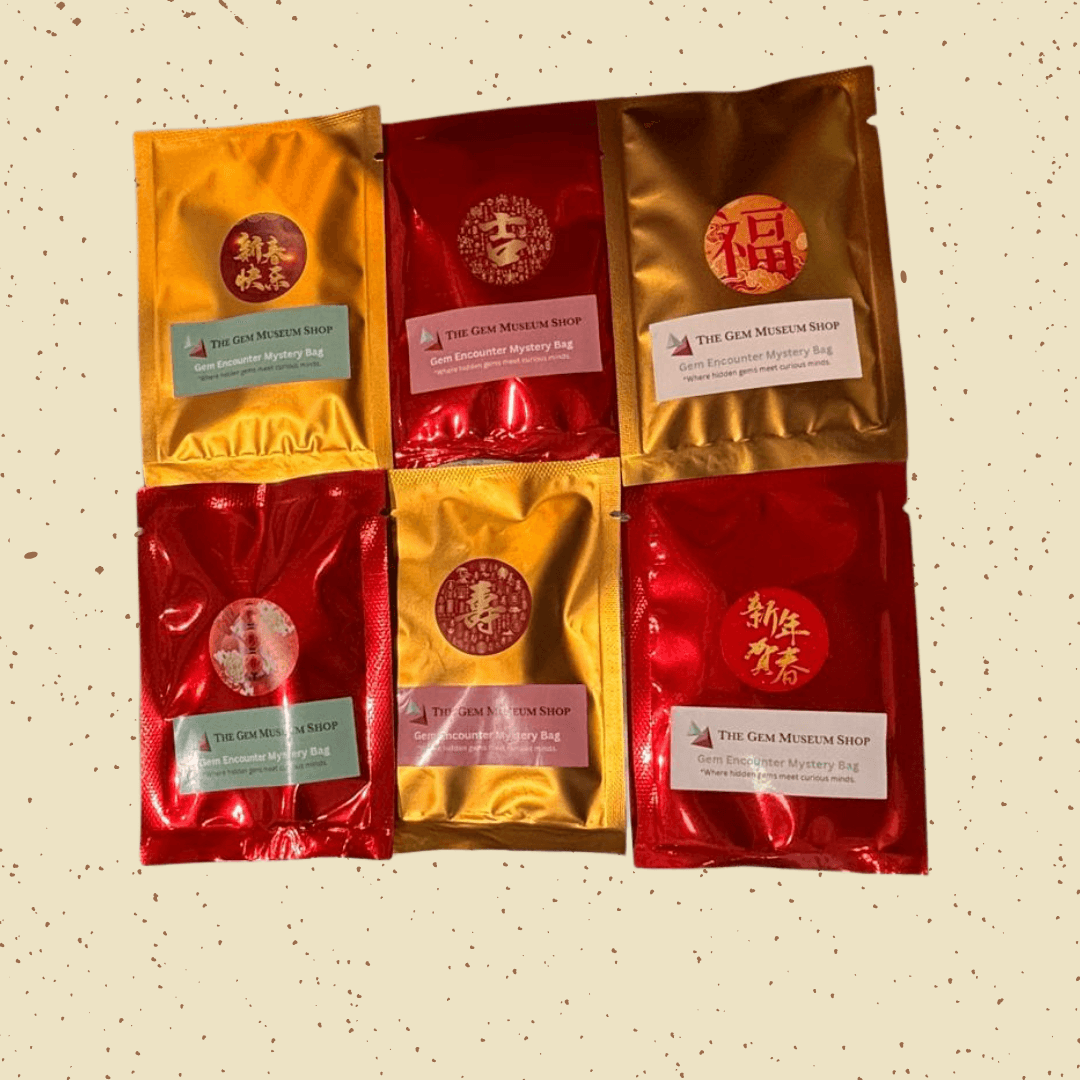
What is inside our Gemstone Discovery Bags and Mystery Boxes?
Our Gemstone Discovery Bags contain one gemstone or mineral specimen per bag. Mystery Boxes are separate options with their own stated contents.
| Option | Price | What is included |
|---|---|---|
| Gemstone Discovery Bag | S$5, S$10 or S$20 | One specimen per bag, selected for that price option. |
| BB01 Mystery Box | S$28 | One mystery mineral and The Gem Museum special-edition keychain. |
| BB02 Mystery Box | S$58 | Two mystery minerals and one UV light. |
The prices and box contents above reflect the listed options. Check the current product listing or ask our team before purchasing, as availability and product selections can change. [1] [2] [3]
The surprise is which specimen you receive—not how many items your chosen option includes. Photographs show examples; they do not guarantee the exact specimen pictured.
Choose a budget you are comfortable with. A first collection does not need to begin with the most expensive option.
Turn an unboxing into a discovery
Once you have opened your bag, pause before putting the specimen away. Try these three approaches.
Look before naming. Place it on a clear surface in good light. What colours can you see? Is the surface smooth, uneven or made up of visible crystal shapes? Does it look the same from every side?
Ask one question. Perhaps you want to know how it formed, why it has that colour or whether its surface has been polished. You do not need to answer everything at once.
Record what you notice. Make a drawing or take a photograph. Write down one observation and one question to explore later.
This approach—choosing a specimen, observing it and asking questions—is also used in the Natural History Museum’s resources for young scientific investigators. The starting point is curiosity, not already knowing the answer. [4]
For parents: explore alongside your child
You do not need to become a gemologist before enjoying this with your child.
Instead of turning the moment into a quiz, try asking:
“What do you notice that I might have missed?”
Let your child describe the specimen in their own words. Draw it together. Compare your observations, then ask our team about the details you would like to understand.
Give the specimen a place in a small collection and make a label together. Labelling and deciding how to organise collected objects are simple activities recommended by the Natural History Museum. [5]
There is no need to buy several bags to make the experience worthwhile. Begin with one and spend time exploring it.
Give your first specimen its own record
A collection becomes more personal when you keep the story alongside the object.
Here is a simple record you can create in a notebook:
Specimen No. 1
Name: Record the identification supplied or confirmed by the team.
Date and place acquired: When and where you received it.
What I noticed: A colour, shape or detail that caught my attention.
What I want to learn: One question to investigate.
My memory: Who was with me, or why this piece matters.
Keep any accompanying labels or information. Where a detail is unknown—such as the exact mine or country of origin—leave it unknown rather than guessing.
Your collection can grow around whatever interests you: colours, crystal shapes, particular minerals or memories of places you have visited. There is no need to collect everything.
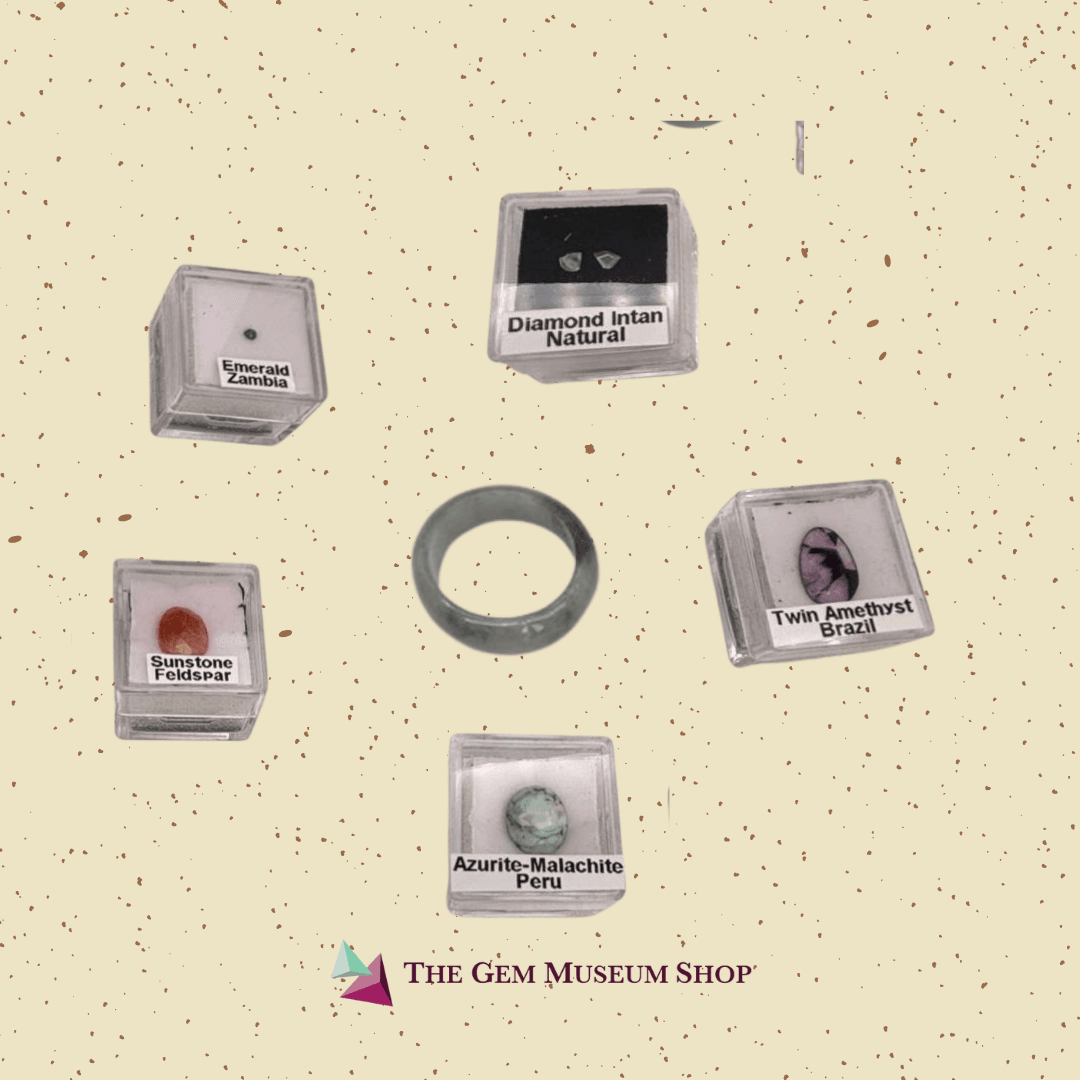
Prefer to choose your specimen?
A Gemstone Discovery Bag is one way to begin, not the only way.
When you already have a particular colour, material or display piece in mind, choosing a visible specimen may suit you better. Tell our team what interests you and ask about the available options.
The Museum Shop’s selection extends beyond Gemstone Discovery Bags and Mystery Boxes to minerals, loose gemstones and accessories. [1]
The aim is to find a starting point for your curiosity, whether it comes as a surprise or a deliberate choice.
Handle your discovery with care
Small specimens can present a choking hazard. Keep them away from children under three and anyone likely to put objects in their mouth. Supervise children during handling and follow the product’s age and safety guidance; being older than three does not automatically make every specimen suitable. [6]
Ask our team how to handle and store your particular specimen. Before washing, soaking, scratching or polishing it, seek advice rather than experimenting on a piece you hope to keep.
For an option containing a UV light, follow the manufacturer’s instructions and ask for a demonstration. An adult should manage its use with children; do not look into the beam or shine it towards anyone’s eyes.
A keepsake with a question attached
A Gemstone Discovery Bag can be a gift, but consider adding something of your own: an invitation to explore together.
You might write:
“Your first specimen. Let’s discover its story together.”
Later, add what you learned and what you remember about opening it. The specimen can become a reminder of an afternoon together, a first museum visit or the beginning of a new interest.
That is how we invite you to approach Mine to Market to Memories: not simply as something to purchase, but as something to notice, understand and make part of your own story.
Sources and further reading
What will your Specimen No. 1 be?
Explore the Gemstone Discovery Bags, Mystery Boxes and specimens at The Gem Museum Shop, 9 Perak Road, Singapore. Ask our team about the options and choose where your discovery begins.
