
The next gemstone on our list of feldspar might be more obscure compared to the ones already introduced, though it is no less outstanding! It is the orthoclase! This gemstone, with its fascinating history and unique properties, offers much more than meets the eye, making it a hidden gem in both jewelry and geology.
History and Meaning
To fully appreciate orthoclase, it’s important to understand its cultural significance and use throughout history. Ancient civilizations valued feldspar gemstones not only for their beauty but also for their believed protective qualities. For instance, many cultures believed that wearing orthoclase would bring luck and ward off negative energies. This historical context enriches our understanding of its importance in the world of gemstones.
Moreover, the color of orthoclase can vary based on its composition. For example, the presence of iron can lead to a slight greenish tint, while high purity levels result in a more transparent appearance. This versatility in color makes orthoclase popular among gem enthusiasts who appreciate the spectrum of hues it can present.
Orthoclase was first named “orthose” in 1801 by Rene Just Haüy after the Greek word “orthos”, meaning “right”. Eventually, Johann Friedrich August Breithaupt changed it to “orthoklas” in 1823, with the new “klas” syllable being based on the Greek word “klasis”, or “cleavage”. It is a reference to the double cleavage planes that form a right angle. Unfortunately, being a less well-known gemstone, it does not have much of a history unlike the other feldspar gemstones. However, its use in various jewelry styles has been noted as early as the 19th century, where it was set in both rings and pendants, often admired for its beautiful shine and clarity.
Colours
In addition to their aesthetic appeal, the colors of orthoclase are influenced by their formation environments. For instance, those found in cooler, more stable geological conditions often display more vibrant colors, while those formed in hotter conditions may appear more muted. This geological context adds another layer of intrigue to this already fascinating gemstone.
Furthermore, its cleavage quality influences how it’s cut. Skilled gem cutters often choose to craft orthoclase into cabochons, which showcase its color and luster without compromising its structure. The meticulous cutting technique enhances its visual appeal while maintaining the integrity of the stone.
It comes in generally paler colours like white, greenish white, grayish yellow, and pale pink. It can also be colourless. The yellow orthoclase is the one often seen in jewelry. Beyond yellow, these gemstones can also exhibit a range of colors such as subtle peach and warm beige due to natural variations in mineral content. These unique color variations contribute to the gemstone’s charm and are often sought after by collectors and jewelers alike.
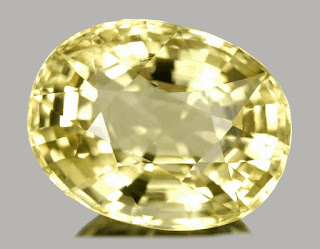
Understanding the geographical distribution of orthoclase is important for collectors. Each location may yield slightly different characteristics in the stones themselves, influenced by the local geological conditions. This variance can enhance the appeal of orthoclase in a collector’s cabinet.
In conclusion, the amazing attributes of orthoclase feldspar, from its historical and cultural significance to its practical applications in both jewelry and geology, make it a truly remarkable gemstone. Its beauty, rarity, and versatility elevate its status to that of a hidden gem worth discovering more about.
Finally, orthoclase feldspar has been a subject of interest in the field of geology for its role in understanding the earth’s formation processes. Its study can provide insights into the conditions of formation of various rock types, making it invaluable for both geological and educational purposes.
These optical properties have led to orthoclase being used in various decorative applications beyond just jewelry. For instance, artisans often incorporate orthoclase into inlays and mosaics, where its colors can complement other stones beautifully, creating eye-catching patterns and designs.
Properties
Orthoclase Feldspar has a hardness of 6. Like other feldspar gems, it can easily be scratched or cleaved when used as jewelry, so it has earned a reputation of being a collector’s gemstone rather than a jeweler’s gemstone. This characteristic means that while it’s stunning, caution should be exercised when wearing orthoclase jewelry to prevent damage.
Unlike most other feldspar gemstones, it is a partially ordered variety of potassium feldspar rather than a plagioclase feldspar. In terms of molecular structure, it is nestled between the more random arrangement of sanidine and the ordered microcline. Its unique structure gives it distinctive optical properties, allowing light to interact with it in interesting ways, creating stunning visual effects that further enhance its desirability.
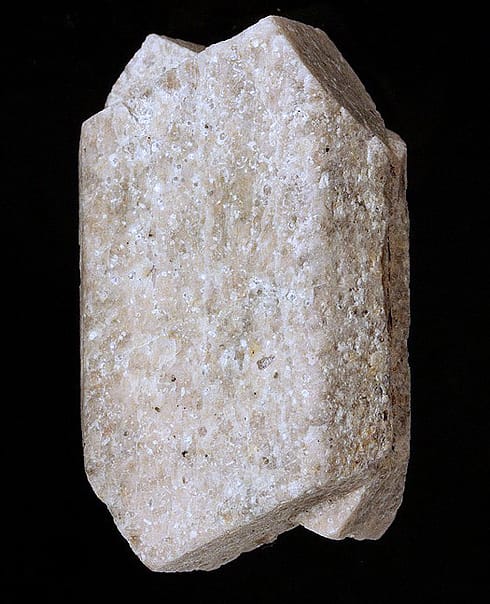
Location
Orthoclase Feldspar appears in all kinds of rocks like igneous rocks (cooled magma). Large crystals of it can be found in a type of igneous rock called pegmatite. They can also be found in other rocks like sedimentary (weathered rocks) and metamorphic (altered from other rocks). The yellow orthoclase used as gemstones are found mainly in Madagascar. Additionally, significant deposits of orthoclase can also be located in locations such as Brazil and the United States, making it more accessible to gem collectors and enthusiasts around the world.
Fun Facts
A typical orthoclase is more known for its widespread use as a raw material for commercial production of glass and ceramics rather than jewelry. A special type of orthoclase that is very popular as jewelry actually exists under another name. It is called moonstone, famous for its blue adularescence! Jewelry aside, orthoclase is also one of the most abundant rock-forming minerals in the earth’s crust! Furthermore, the use of orthoclase in scientific research for dating geological formations has gained attention, showcasing its importance beyond aesthetics.
